Plan solo travel in Hokkaido: choose a car-free base, compare real one-person costs, book meals and onsen stays, and prepare your return journey.
- Start with one base if changing hotels would consume your sightseeing time.
- Compare the total for one guest, not a per-person price based on two sharing.
- Check the return journey before committing to a rural day trip.
Choose a base before choosing every sight
For a first car-free solo trip, our practical starting point is a Sapporo base with one optional day trip. You can keep your bag at the same accommodation, choose meals day by day and drop an outing without replacing the whole route. This is an editorial recommendation, not a claim that Sapporo suits every interest or is always the cheapest place to stay.
Choose Hakodate instead when its food, streets and night view are the main reason for travelling; choose Asahikawa when your priority is the city and a confirmed nearby excursion. Do not combine all three simply because you are free to move quickly. Count station access, checkout, waiting and luggage collection as travel time, not just the time on a train.
A second base makes sense when it gives you another full day in the area you actually want to visit. If it leaves only an arrival evening and an early departure, compare staying longer at the first base and saving the other region for another trip.
Choose a Sapporo accommodation area
A three-night framework, not a fixed timetable
Night 1: settle into your base, locate the next morning’s departure point and eat near the accommodation. Avoid making a prepaid rural excursion depend on a late flight arriving on time.
Day 2: use the city for your main interest and one indoor fallback. Day 3: take a day trip only after confirming both outward and return services; otherwise use the extra city day. Night 3 stays in the same base. Day 4 is the departure journey, with luggage collection and airport procedures included. This is a planning example, not a promise that every flight schedule fits.
For a longer trip, extend a base before adding another. In winter, keep an optional outing separate from a must-catch departure. Changing to a distant city on the final evening adds another transport dependency; decide what you will cancel if the weather removes that move.
Build the complete trip budget
Price the room and transport for one person
Enter one adult and the actual dates when searching. Compare the full stay total, room type, bathroom arrangement, meals, cancellation deadline and any separately payable charge. A displayed price per person based on two guests is not a confirmed solo rate. A twin room for sole use, a single room and a dormitory bed are different products.
A private room can be worth more if you need quiet, secure luggage storage or an early night. For a shared room, ask about locker size, late entry, bedding and luggage arrangements. Do not assume a hostel provides social activities or that a hotel will hold bags between separate bookings.
Calculate: accommodation for one + your actual transport + meals + activities + luggage costs + a disruption reserve. Taxi, rental-car and private-tour costs cannot be divided by imaginary companions. For a tour, confirm whether one booking is accepted, whether a minimum group size affects operation, and what happens if it does not run. A rail pass is worthwhile only against the journeys you will actually take.
Eating alone and booking an onsen stay
Choose one meal you really want, then leave other meals flexible around opening hours and your route. Counter seating can be useful, but confirm whether the restaurant takes a booking for one; neither a free seat nor a solo booking is guaranteed. Check minimum orders, set portions, last orders and payment before choosing a meal you cannot easily leave unfinished.
At an onsen accommodation, search for one guest on the actual date and ask about the dinner time, latest arrival, meal inclusion and bath access. A property accepting day bathers does not establish that it has an overnight solo plan. Do not book a distant dinner-inclusive stay until the connection from the station and the return the next day are workable.
Copyable question: “I am travelling alone on [date]. Can I book [room or activity] for one person? What is the total including required charges, the arrival or meeting deadline, and the cancellation rule? If transport is disrupted, how should I contact you?”
Plan the return, not just the outward connection
Use the operator’s timetable for the travel date and confirm the actual boarding stop. Write down the return service you intend to take, an earlier alternative if available, and what you will do if neither operates. A line on a map does not establish a usable same-day connection. JR Hokkaido’s travel-information page links to access maps and railway guidance; buses and tours need their own operator checks.
Before a rural outing, decide whether a taxi is actually available and affordable; do not make an unconfirmed pickup your only fallback. Check the last walk from the stop to the lodging, reception hours and how to reach staff after a delay. Being alone means nobody else automatically collects the bag or arranges the replacement room.
Keep an offline copy of your lodging address, reservations and transport plan, and carry essential medicine, identification and charging capacity. Share your intended destination and check-in time with someone you trust. These are practical precautions, not a guarantee of safety. Remote walks and mountain trips require their own conditions, equipment and local access advice; an urban solo itinerary is not a hiking plan.
If the plan breaks: contacts and a final checklist
First contact the operator for the booking that is affected, then the lodging or activity whose arrival deadline you may miss. Keep each cancellation and refund decision separate. Do not buy a second non-refundable option on the assumption that the first booking will be repaid.
For visitors needing language help, JNTO lists the Japan Visitor Hotline at 050-3816-2787, or +81-50-3816-2787 from overseas, available 24 hours a day in English, Chinese and Korean. The same official page lists 110 for urgent police assistance and 119 for fire or ambulance. The visitor hotline is not a replacement for those emergency services.
Before paying, confirm: a room booked for one; a reachable check-in deadline; meals that fit arrival; a return from each outing; luggage arrangements; cancellation cutoffs; and funds for a changed plan. Official JNTO and JR pages linked below were read on 25 October 2026 (JST). The base choice, example itinerary and budgeting method are our editorial advice; no individual room, tour, fare or future timetable is verified here.
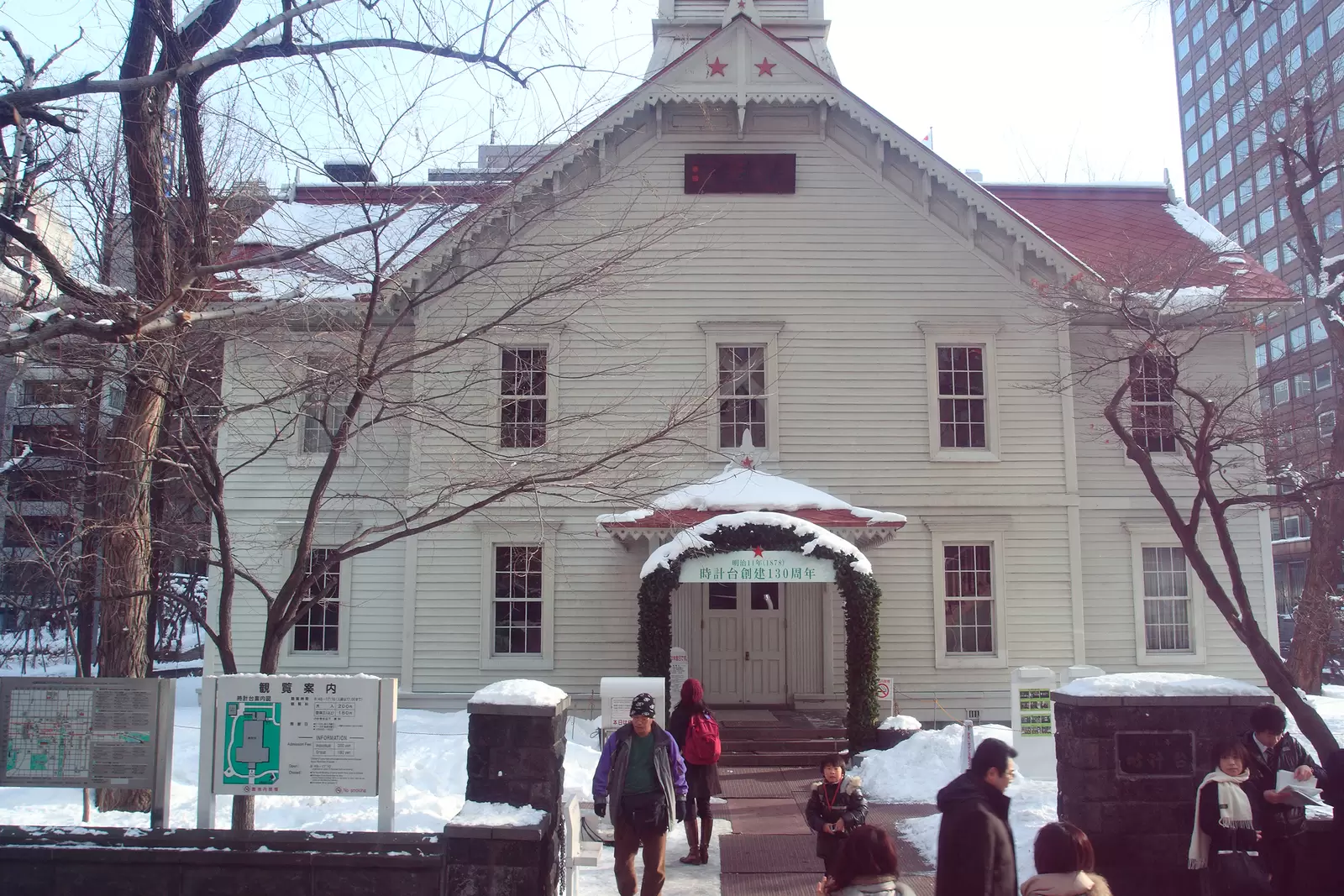
The cover shows the Sapporo Clock Tower in January 2009. It illustrates a city-based trip, not current snow conditions.
JNTO — Japan Visitor Hotline · JR Hokkaido — Travel Information
Northern Land Hokkaido Team — Sapporo, Japan