Plan an Asahidake ropeway day trip by bus: choose an Asahikawa base, protect the return connection, distinguish the Sugatami walk from summit climbing, and prepare a weather fallback.
- Choose the return bus before deciding how long to spend on the mountain.
- A ropeway ride is not a summit ascent, and an operating ropeway does not mean the walking trail is safe.
- Check the date-specific maintenance calendar: the current schedule marks 16 November–10 December 2026 closed.
1. Choose the trip you actually want
Asahidake is in Higashikawa, east of Asahikawa. This guide is for a ropeway visit and, only when conditions permit, a walk around Sugatami Pond. It is not a summit-climbing itinerary. The upper station is Sugatami Station, not the summit of Asahidake.
The operator describes the pond circuit as about 1.7 km and roughly one hour under suitable conditions, with its walking-course introduction covering July to mid-October. That is a reference, not your total visit time or a promise that the path is open. Add ticket queues, the ride, orientation, breaks and the descent. Snow, ice, visibility and personal mobility can make walking inappropriate even outside winter.
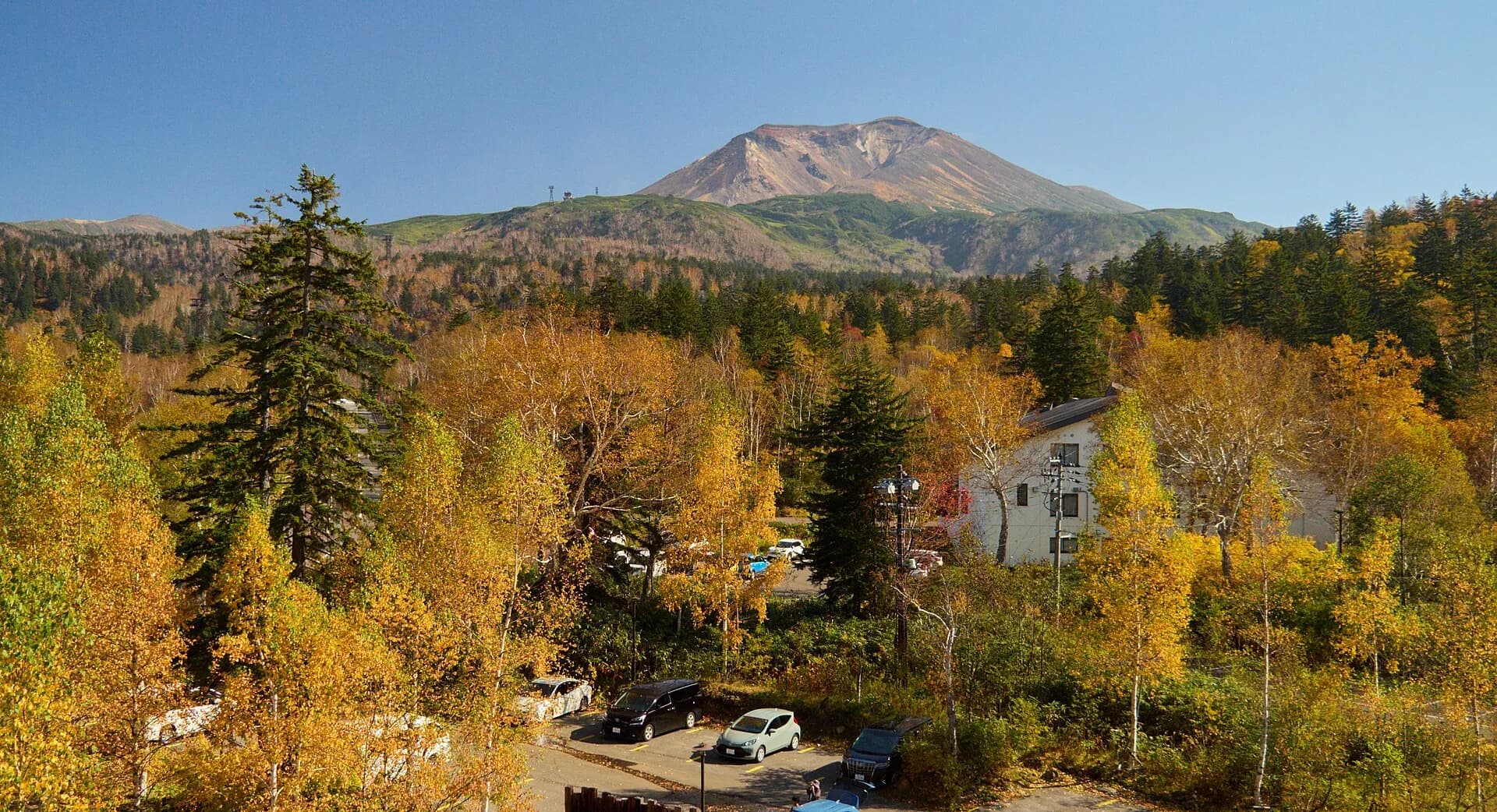
The photograph shows the Asahidake landscape, not today’s conditions. Choose a station-area view-only visit if that fits the conditions and your party; do not treat a shorter walk as an obligation to leave the station.
2. Start with Asahikawa, not a chain of connections
Asahikawa Denkikidou’s route 66, the Ideyu-go, links Asahikawa with Asahidake via Asahikawa Airport and Higashikawa. Check the operator’s current timetable for your date, the boarding stop and both directions. Do not confuse it with the bus to Asahiyama Zoo or an ordinary airport transfer.
For a car-free trip, staying in Asahikawa the night before removes the need to connect from Sapporo that morning. Compare the time actually available on the mountain, not only the earliest train arrival. If travelling from Sapporo, write down the train, transfer, outbound bus and return bus before booking; abandon the plan if only a fragile connection makes it work.
An airport stop does not make this a flight connection service. The bus operator explicitly states that route 66 does not connect with aircraft arrivals. Do not assume it will wait for a delayed flight, or build a mountain visit into a tight departure day.
3. Work backwards from the return bus
Write four times in your note: the chosen return-bus departure, your target arrival at its stop, your target downhill ropeway ride, and the time to turn back from the walk. Verify the last downhill service separately: the bus timetable and ropeway closing time are different constraints.
Allow for the descent queue, finding the stop, toilets and collecting belongings. The operator does not accept ropeway reservations. A ticket is not a reserved departure slot; during busy periods, ask staff about queues before committing to a walking route. Choose margins for the actual conditions rather than relying on a universal minimum connection time.
If the outward bus is delayed, shorten or cancel the walk first. Do not consume the return margin to complete a full loop. A later bus, an available taxi or a hotel pickup is not guaranteed: confirm any alternative before treating it as a backup.
4. Check closure dates and mountain conditions
Official pages checked on 26 October 2026 show the ropeway closed from 16 November through 10 December 2026. This is the currently published calendar, not an annual rule. Recheck the operator’s date-specific schedule, operating status and mountain weather before departure; schedules may change.
The live weather panel can show a different observation time from the timetable. Read its timestamp, wind and visibility rather than relying on the weather in Asahikawa. An operating ropeway is not permission to take a summer walk on snow-covered terrain.
Use footwear with suitable grip, waterproof and warm layers, water and food appropriate to your planned visit. Ask staff about the current walking surface. If there is snow, poor visibility or conditions beyond your equipment and experience, do not attempt the pond circuit or improvise a descent on foot. Winter mountaineering is a different activity requiring its own preparation.
5. Keep luggage, meals and costs practical
Leave large luggage at your confirmed accommodation storage or another verified facility if possible. Ask about collection hours, availability and whether storage is allowed before check-in or after checkout. The bus operator limits luggage and may refuse extra pieces when space is constrained; do not assume a suitcase will always fit.
Budget the bus in both directions, the appropriate ropeway ticket, food and any separately confirmed transfer or storage. Check current fares and child conditions rather than assuming a rail pass covers these services. Keep a cancelled visit and a replacement outing as separate budget scenarios.
Do not make the only meal depend on the upper-station shop being open. Carry suitable supplies and check restaurant hours. For an onsen stay, confirm dinner arrival time, pickup arrangements and the following morning’s transport directly with the property; a room reservation does not automatically include a transfer.
6. Decide the fallback before leaving town
If the ropeway is closed or mountain conditions are unsuitable before departure, keep the day in Asahikawa or choose another independently checked outing. Do not replace Asahidake with Kurodake on the assumption that the two ropeways share a base or that public transport between them is convenient.
For a two-night Asahikawa stay, you can compare the two mornings’ forecasts and operating information before choosing a mountain day, subject to the cancellation terms of anything already booked. This creates flexibility; it does not guarantee clear weather or operation.
A useful question to staff is: “We must return on this bus. With today’s conditions and queues, what time should we be back at Sugatami Station, and is the pond walk appropriate for our equipment?” Save the operator pages and return plan before travelling. The planning sequence here is editorial advice, not a guaranteed connection.
Northern Land Hokkaido Team — Sapporo, Japan