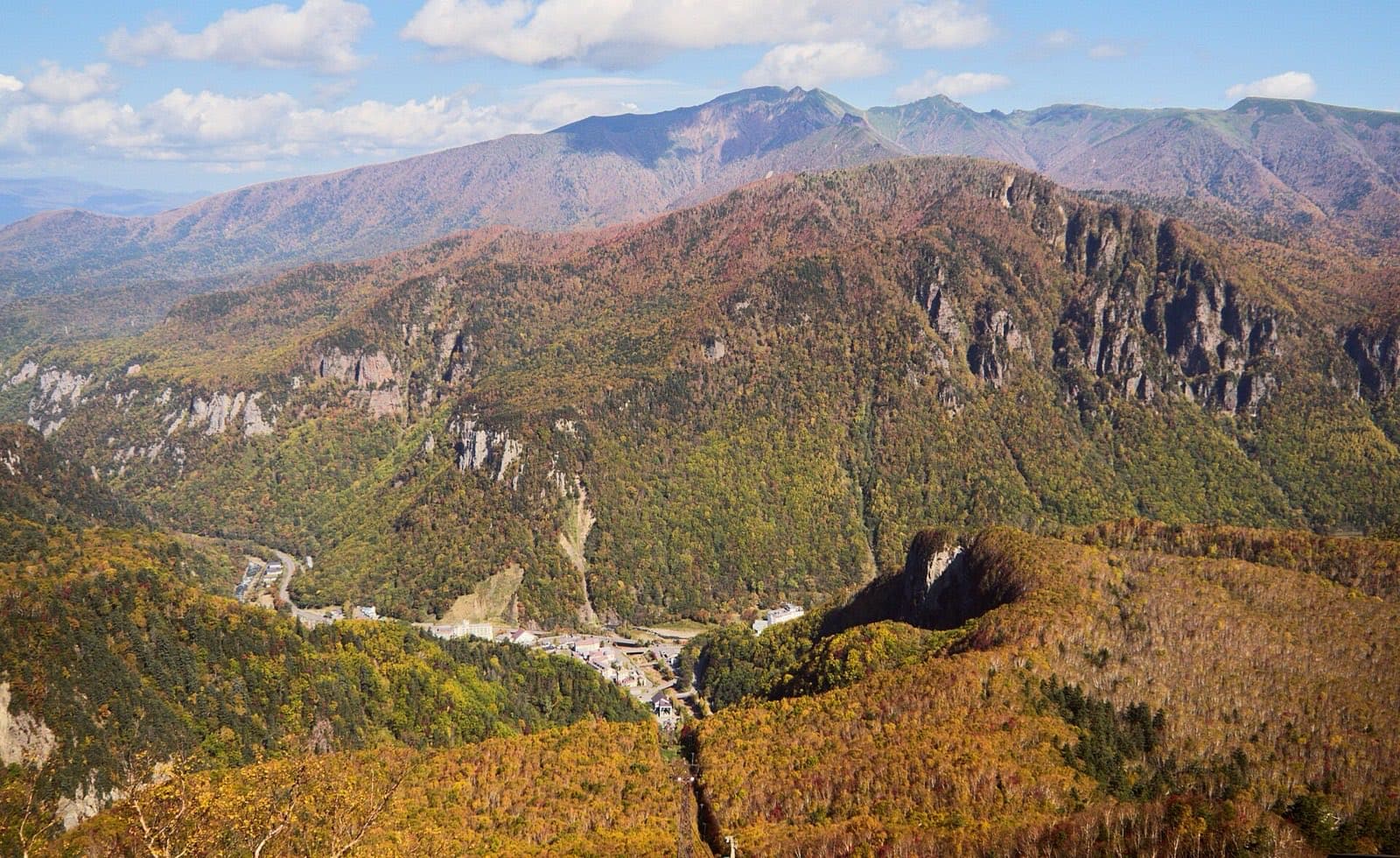
Every autumn in Japan starts in the same place. While Tokyo is still fanning itself through late summer, the high slopes of Daisetsuzan — the vast volcanic massif at the center of Hokkaido — begin to turn. The rowan goes red, the alpine shrubs go orange, and for a couple of weeks Japan's newest fall season belongs entirely to this park, famed as the earliest place in the country to change color.
It's a fitting stage for it. Daisetsuzan is Japan's largest national park — a plateau of peaks the Ainu called Kamuy Mintar, often translated as "the playground of the gods." In autumn, that name feels literal.
When it happens
The color starts high and moves down:
- Mid-to-late September — the alpine zone around Asahidake and Kurodake typically peaks. This is the famous window, and the one that shifts most from year to year.
- Late September to mid-October — the color descends through the forest belt toward the valleys.
- Mid-to-late October — the Sounkyo gorge and lower slopes take their turn, usually finishing with golden larch.
Treat every date above as a moving target: peaks shift by a week or more depending on the year. Check with the ropeway operators or local tourism offices shortly before you go, and keep a spare day in the plan if the foliage is the point of the trip.
One more honest note: autumn is short up here, and winter is close behind it. The high zones can see their first snow while the lower slopes are still in full color — sometimes as early as late September. It's part of the spectacle (red slopes under fresh white summits is the classic Daisetsuzan photograph), but it means alpine conditions, not garden-stroll conditions.
Three ways into the color
1. The Asahidake ropeway (west side)
From Higashikawa, the ropeway rises to the Sugatami plateau on Hokkaido's highest peak, Asahidake. A mountain walking route circles steaming fumaroles and small ponds that mirror the mountain — as close to alpine scenery as Japan gets without an overnight hike. This is the side to choose for open, high-plateau color. Asahidake Onsen at the base makes a quiet overnight.
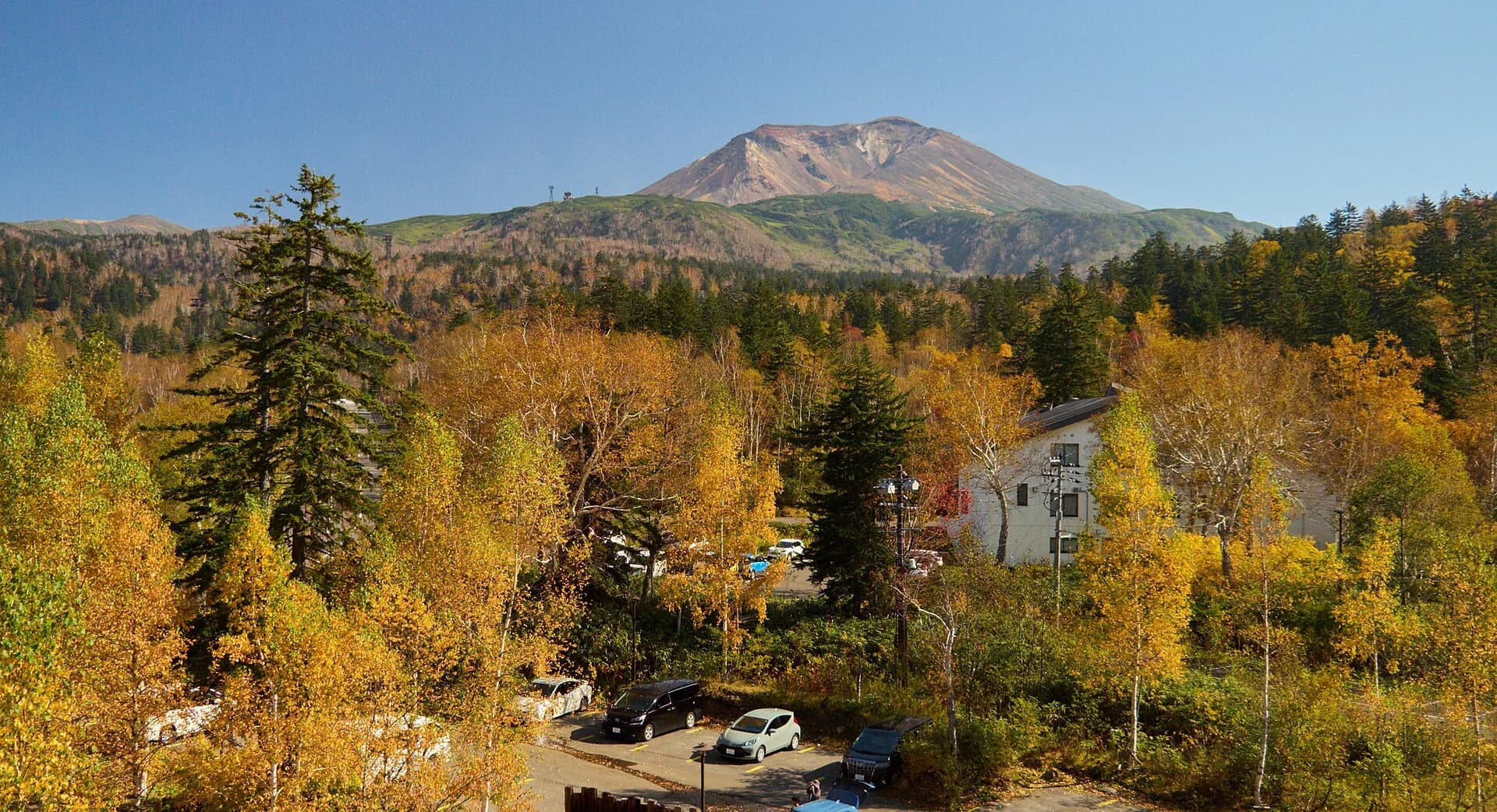
2. The Kurodake ropeway from Sounkyo (east side)
From the onsen town of Sounkyo, a ropeway and chairlift climb Kurodake, where the upper slopes turn early and hard. Below, the Sounkyo gorge itself is worth the trip: near-vertical cliff walls along the river, with the twin waterfalls Ginga-no-taki and Ryusei-no-taki — the "Milky Way" and "Shooting Star" falls — dropping past the color. Sounkyo is a base for the Kurodake side, with accommodation and onsen; check your chosen hotel’s access and meal times.
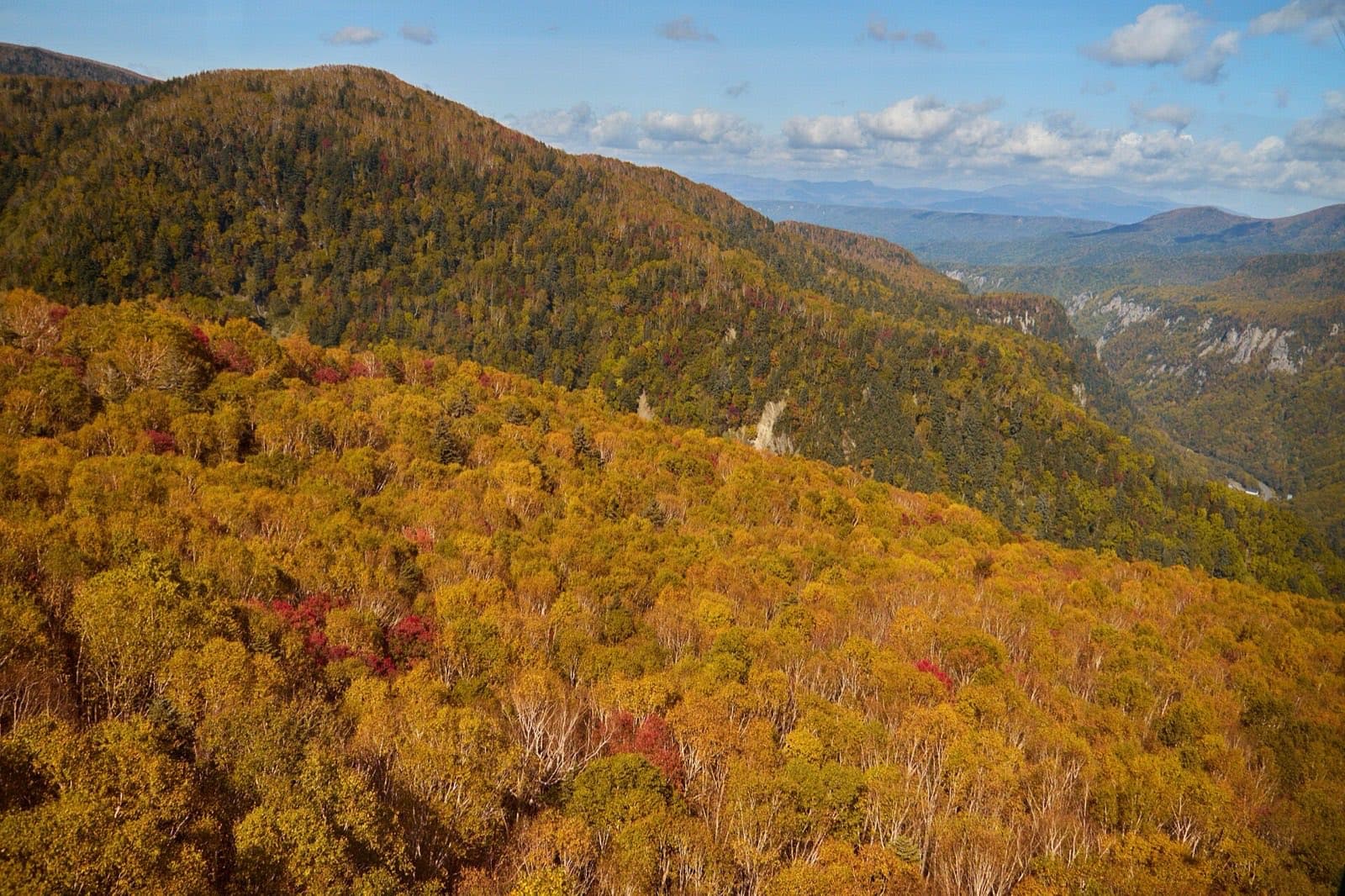
3. Kogen Onsen and the pond country
For the signature autumn scene — tarns ringed in red and orange — the pond-hopping trail at Daisetsu Kogen Onsen is the connoisseur's choice. Be aware it's genuine brown-bear country: the trail operates with a staffed information center, and access is managed during the peak autumn weeks, sometimes by shuttle. Rules change season to season, so confirm the current arrangement locally before building your day around it.
Beyond the leaves
- Onsen everywhere. Sounkyo, Asahidake Onsen and the smaller spring towns mean every cold mountain day ends in hot water.
- Asahikawa as a gateway. Check the journey from Asahikawa to your specific mountain entrance rather than using one travel time for the whole park; the city is also known for shoyu ramen — see our Kamikawa region guide for the full area.
- Furano and Biei next door. The patchwork hills are quieter and amber-toned in autumn; the Furano & Biei guide covers them.
A ropeway day without a summit hike: plan the descent first
Choose one side for the day. Asahidake and Kurodake are separate access points, not two stations on one sightseeing route. The following is an NLH planning method, not a timed tour or a guarantee that a path will be open.
- Asahidake: Decide whether you want a view from the upper station or a walk around the Sugatami area. The latter still involves mountain terrain; a ropeway ticket does not make the walking route step-free or suitable in snow. Check the operator's schedule and access information and the visitor centre's local reports before setting out.
- Kurodake: The operator distinguishes the ropeway to the fifth station from the chairlift to the seventh station. Neither is a ride to the summit. For a non-summit visit, start with the fifth-station viewpoints and only add the chairlift if its operation, conditions and return timing suit your group. Check each service separately rather than treating them as one opening window.
- Getting home: Start with the bus you need back to your accommodation, not just the last ropeway down. Allow for the descent queue, the ride, the walk to the bus stop and any bag collection. Set your walking turnaround time before leaving the upper station. A later ropeway departure is no help if your onward bus has already gone.
- Different walking abilities: Ask about the exact surfaces, steps and indoor waiting options for the route you intend to use. If the group splits, agree where to reunite and a time that preserves everyone's descent and bus connection. Do not assume a waiting area will remain open until the last transport departure.
If wind, cloud or snow changes the day
Check both operation and trail conditions: a running ropeway does not mean every path is usable, and poor visibility does not necessarily mean the operator has cancelled the service. If the planned outing is unsuitable, keep a lower-level meal, town visit or bath as an alternative only after checking its access and opening conditions. Do not drive to the other side of the mountains merely because your first ropeway is suspended.
For a two-night trip, moving the mountain visit to the other full day can work if the transport and any reservations can also change. A retry on departure morning needs enough time for bags and the next train or flight; otherwise give it up. Compare an Asahikawa base with a mountain stay by the journeys available on your actual dates, rather than assuming either is always more convenient.
Before buying a replacement outing, check the original ticket's unused or partly used refund terms with the seller. Record bus fares, ropeway and optional lift tickets, parking, meals and any accommodation change in your trip budget. A suspended ropeway does not establish the refund conditions for a separately booked hotel or bus.
The operator pages linked above were checked on 19 October 2026 for the service layout and planning information; check the current day's notices again before travel.
Match the stay search to your mountain approach
The accommodation link below searches Kamikawa town, including Sounkyo; it is not restricted to hotels beside the Kurodake ropeway. It is also not an Asahidake Onsen accommodation search. Check the property's actual address, your chosen ropeway approach, dinner deadline and return transport before booking. The Asahikawa accommodation guide compares city, Sounkyo and Asahidake bases.
Sounkyo's location is described in Kamikawa town's official onsen guide. A town-wide search does not guarantee a room at a particular onsen, a transfer or availability on your dates.
Practical notes
- Dress for the mountain, not the forecast in town. Above the ropeways it can be near freezing while Asahikawa is mild. Warm layers, hat, gloves, real shoes.
- Go early on peak weekends. The famous windows draw domestic crowds; allow time for parking and boarding queues even if you arrive early.
- Don't over-schedule. Cloud cover can hide everything; a flexible extra half-day rescues more trips than any other tactic.
- Respect the bear rules. Carry a bell on quieter trails, follow posted guidance, and treat managed-access areas as non-negotiable.
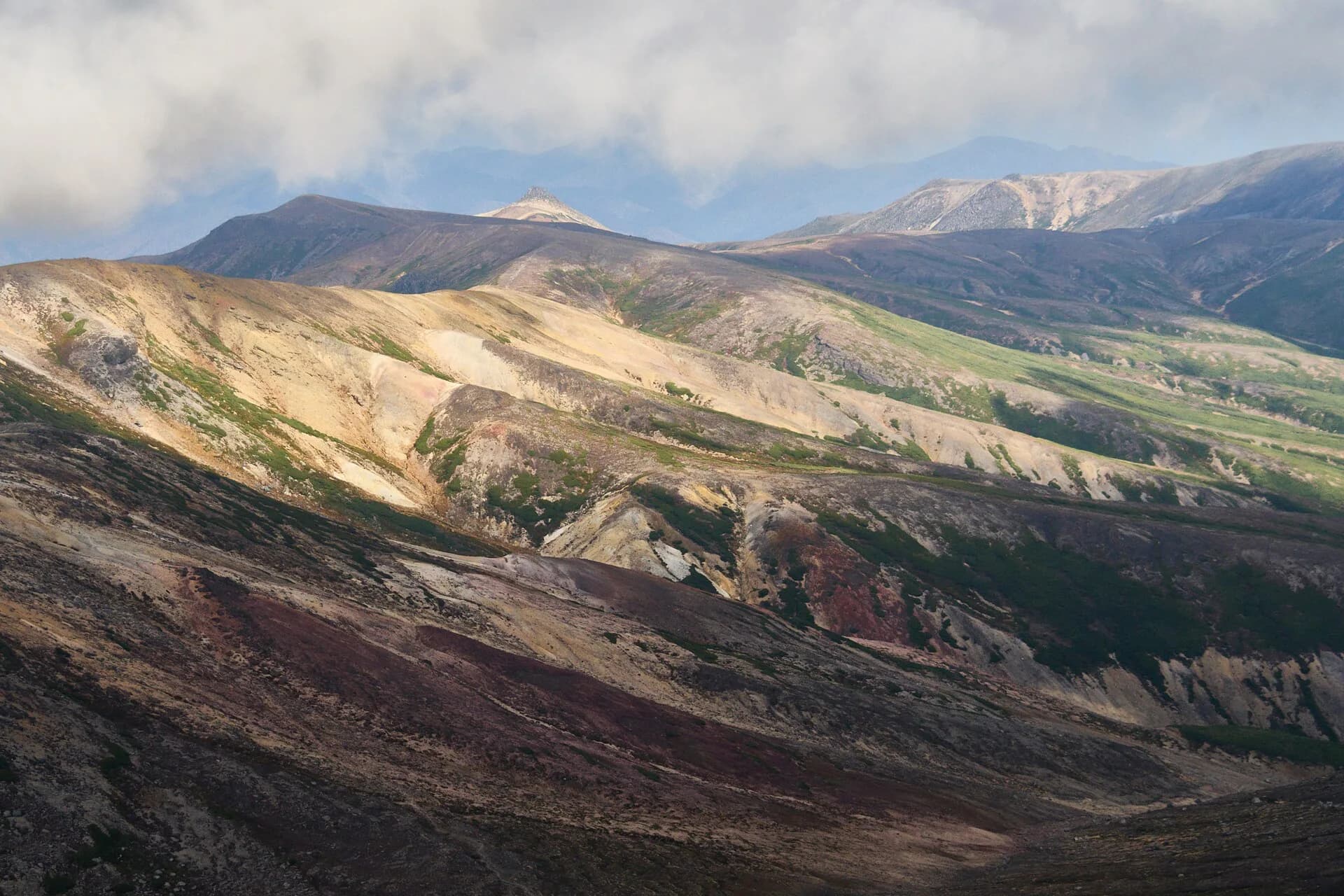
Getting here is simplest by car — the park sits about halfway between Asahikawa and the island's east. Our route planner slots Sounkyo naturally into a 7- or 10-day loop.
The bottom line
If you want to see Japan's fall colors before anyone else in the country, this is the mountain. Come in the second half of September for the alpine peak, base yourself in Sounkyo or Asahidake Onsen, ride up early, and let the season's first red slopes — quite possibly under the season's first snow — do the rest.
Planning the wider season? Zoom out with Hokkaido in Autumn — the month-by-month guide to the whole island.
Book what's in this guide
These are affiliate links. We may earn a commission if you book — the price you pay is the same. Learn more

Viator links open a regional or category list, not a single tour. Check each activity's location and dates before booking.
Northern Land Hokkaido Team — Sapporo, Japan