Noboribetsu: an onsen overnight
Walk around Jigokudani, then leave time for bathing and dinner at your accommodation. Plan the journey to the onsen hotel, not just to Noboribetsu Station.
See sights and transport →One of Hokkaido's 14 regions
Noboribetsu, Lake Toya and Upopoy: plan a trip through Iburi.
Iburi is a region of southwestern Hokkaido, not a single town. It includes Noboribetsu, Lake Toya, Shiraoi, Muroran and Tomakomai. Use it as the part of your Hokkaido trip for hot springs, volcanic scenery and learning about Ainu culture at Upopoy in Shiraoi.
Choose your overnight stop before linking the sights together. Noboribetsu suits a stay focused on the hot-spring town and Jigokudani; Toyako Onsen suits lakeside walks and a Lake Toya stay. Shiraoi is the stop for Upopoy. These places are spread out, so a regional guide should help you choose a route rather than turn every highlight into one crowded day.
🧭 Plan rail journeys to Shiraoi, Noboribetsu or Toya, then check the final local connection. Noboribetsu Station is not in the hot-spring town, and Toya Station is not on the Toyako Onsen lakefront. Check bus or hotel pickup times before booking accommodation; a rail journey alone does not get you to the ryokan door.
For a short visit, choose one main base. Stay in Noboribetsu for the hot-spring town, or Toyako Onsen for time by the lake. Give Upopoy its own visiting time rather than treating it as a quick stop between two hotels.
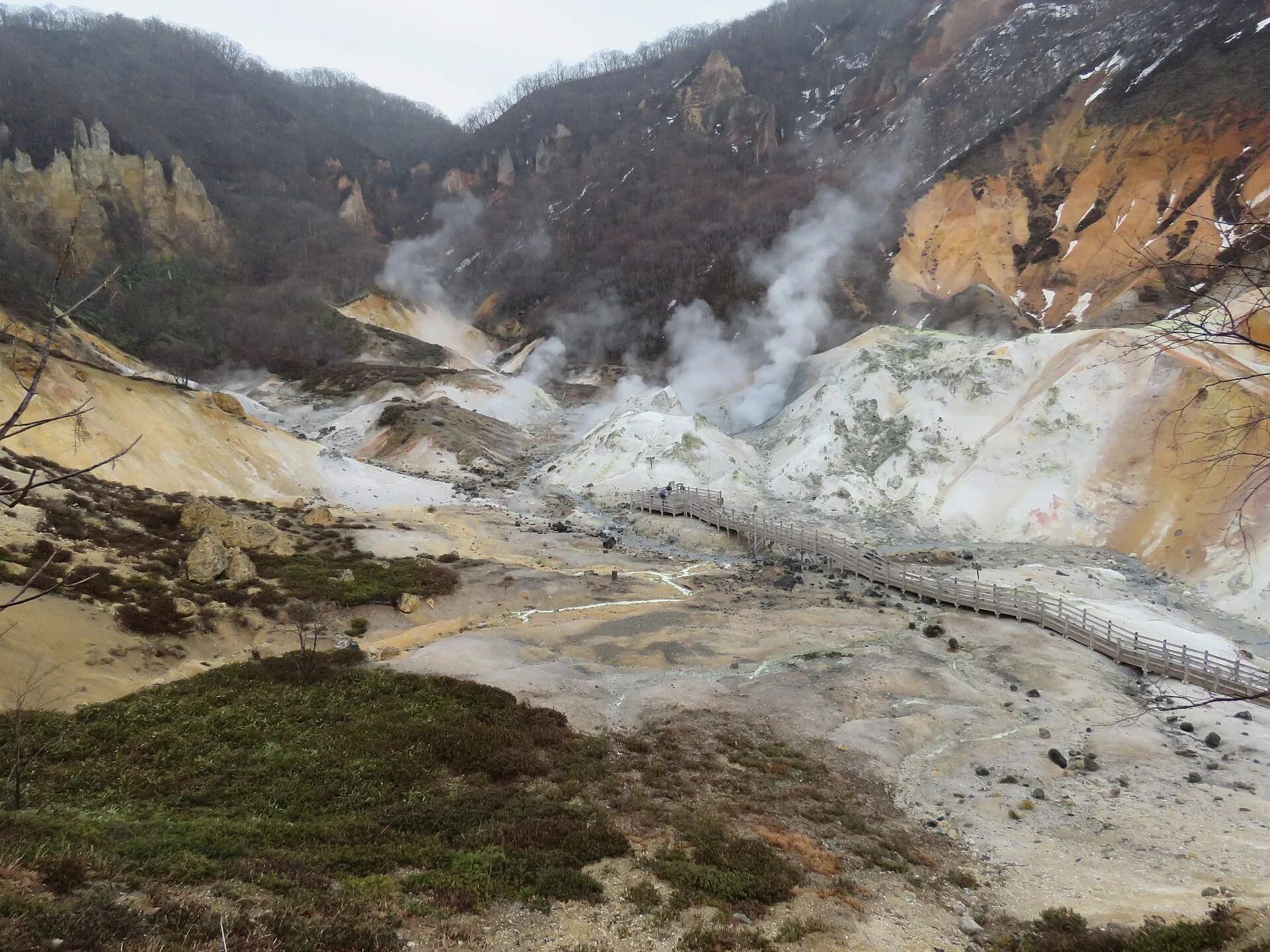
Walk around Jigokudani, then leave time for bathing and dinner at your accommodation. Plan the journey to the onsen hotel, not just to Noboribetsu Station.
See sights and transport →For a lakeside stay and hot springs, compare hotels around Toyako Onsen. Check the bus or pickup from Toya Station and the connection for your onward journey.
See sights and transport →Choose the exhibitions and experiences you want to see, then check opening days and booking conditions. Include the walk from Shiraoi Station and the onward train or hotel journey.
See sights and transport →For a day visit, our recommendation is to focus on Upopoy or choose one of the two onsen areas. For an overnight, one option is Shiraoi on day one followed by your chosen onsen hotel, then nearby walks and the return journey on day two. Before adding the second onsen area, check that your plan still leaves time for exhibitions, bathing and meals.
Upopoy's official access information puts the walk from JR Shiraoi Station's north exit at about 10 minutes, or 500 metres. Include that walk rather than ending your journey plan at the station. Official Upopoy access
For the region's municipalities: Hokkaido Government's Iburi municipal guide (Japanese). Official information checked on 15 October 2026; the itinerary choices are NLH editorial suggestions.
You can plan a trip around rail and local connections, but check each final leg. Noboribetsu Station and Noboribetsu Onsen are different places, as are Toya Station and Toyako Onsen. Confirm the onward bus or hotel pickup and your accommodation's dinner deadline before choosing a train.
Coming from Otaru? Compare routes to Noboribetsu
Official visitor information: JNTO — Noboribetsu, Upopoy & Around. Route choices above are NLH editorial suggestions. Check current transport, opening days and booking conditions with each operator.
A caldera lake with hot-spring hotels, nightly summer fireworks and a geopark's worth of volcano stories.
Steaming 'Hell Valley' above one of Japan's most famous onsen towns.
The National Ainu Museum and Park — the place to meet Ainu culture as a living tradition.
Cape Chikyu's ocean cliffs by day, steel-town nightscapes after dark.
Click a town to jump to its entry
Muroran室蘭市
Muroran is heavy industry turned scenic — Cape Chikyu's whale-watching cliffs, steel-mill night views, and its own cult pork yakitori.
Muroran town page →Tomakomai苫小牧市
Tomakomai lands more hokki surf clams than anywhere in Japan, skates serious ice hockey, and guards bird-filled Lake Utonai by the airport road.
Tomakomai town page →Noboribetsu登別市
Hokkaido's most famous hot-spring town, fed by the boiling 'Hell Valley'. Eleven kinds of water, demon statues, and steam everywhere.
Noboribetsu town page →Date伊達市
Date was settled by a samurai clan from Sendai and enjoys Hokkaido's mildest weather — locals call it the island's Shonan coast.
Date town page →Toyoura豊浦町
Toyoura grows sweet strawberries on Volcano Bay, where Japan's scallop farming was born — and hosts the world's oddest boxing-themed cape lodge? No: just great berries, scallops and quiet coves.
Toyoura town page →Sobetsu壮瞥町
Sobetsu watches over Showa-Shinzan — the volcano that grew out of a wheat field in the 1940s — and throws an international snowball-fight championship.
Sobetsu town page →Shiraoi白老町
Shiraoi is home to UPOPOY, Japan's national Ainu museum and park — plus prized Shiraoi beef and tarako from Kojohama.
Shiraoi town page →Atsuma厚真町
Atsuma leads Japan in haskap berries — the tart blue fruit of the north — and its Pacific beach is a surprising surf spot.
Atsuma town page →Toyako洞爺湖町
A caldera lake with a live volcano on its shore. Lakeside onsen ryokan, nightly summer fireworks, and the Windsor Hotel above the clouds.
Toyako town page →Abira安平町
Abira makes cult-favorite camembert, grows sweet melons, and parks a beloved D51 steam locomotive at its roadside station.
Abira town page →Mukawaむかわ町
Mukawa means shishamo — the real, local kind grilled whole — and Kamuysaurus, the dinosaur skeleton dug from its hills.
Mukawa town page →Plan a family trip to Hokkaido with fewer hotel changes: a five-day Sapporo base, AOAO SAPPORO or Shiroi Koibito Park indoors, car or train, and room checks.
Read →
Plan Lake Toya without a car: base yourself in Toyako Onsen on the south shore, compare the direct bus from Sapporo with JR plus a local bus, choose a summer or winter lake cruise, and pick an onsen hotel by its baths.
Read →
Compare New Chitose Airport to Noboribetsu Onsen by reserved bus, train via Minami-Chitose or car. November 2026 bus fare, the station transfer, late arrivals and the return to the airport.
Read →
Plan a Noboribetsu Onsen day trip without a car. Compare Sagiriyu and Dai-ichi Takimotokan, towel costs, Jigokudani, station transfers and the journey back.
Read →
JR Hokkaido's passes for overseas visitors: the Hokkaido Rail Pass costs ¥22,000 for 5 days (¥28,000 for 7, ¥37,000 for 10) bought in advance, and 4-day area passes cover Sapporo–Noboribetsu (¥10,000) or Sapporo–Furano (¥11,000). Coverage, rules and how to decide.
Read →
How long from Furano or Biei to Noboribetsu Onsen? By car, about 1 hr 48 min on the expressway from Shimukappu IC; by train from Biei, about 3 hr 10 min on board via Asahikawa and Sapporo, plus the last stretch to the onsen town.
Read →