One of Hokkaido's 14 regions
Okhotskオホーツク
Abashiri, Monbetsu and Shiretoko in northeastern Hokkaido.
The Okhotsk region covers 18 municipalities in northeastern Hokkaido, including Abashiri, Kitami, Monbetsu and Shari. In winter, sightseeing boats leave Abashiri and Monbetsu. Drift ice can reach this coast, but when, where and how much varies from year to year, and weather and sea conditions decide each departure.
In the green season, plan around lakes and coastline such as Lake Saroma and the Utoro side of Shiretoko, and check road, trail and tour access for your dates. The region is wide, so choose one main base rather than trying to see it all in a day.
🧭 Memanbetsu Airport is the gateway for Abashiri and the Shari side; Okhotsk Monbetsu Airport serves Monbetsu. From either airport, the last leg to your pier, hotel or Utoro is a separate bus, taxi or car journey, so check it for your dates.
Where is Okhotsk? Choosing between Abashiri, Monbetsu and Utoro (Shiretoko)
Okhotsk is a region of northeastern Hokkaido made up of 18 municipalities: three cities, 14 towns and one village, including Abashiri, Kitami, Monbetsu and Shari. This guide covers the Hokkaido region, including its coast and inland places such as Kitami, rather than the whole Sea of Okhotsk. It is too big to cover in a day, so choose one main base. Hokkaido Government municipality list (Japanese) · Okhotsk Bureau (Japanese)
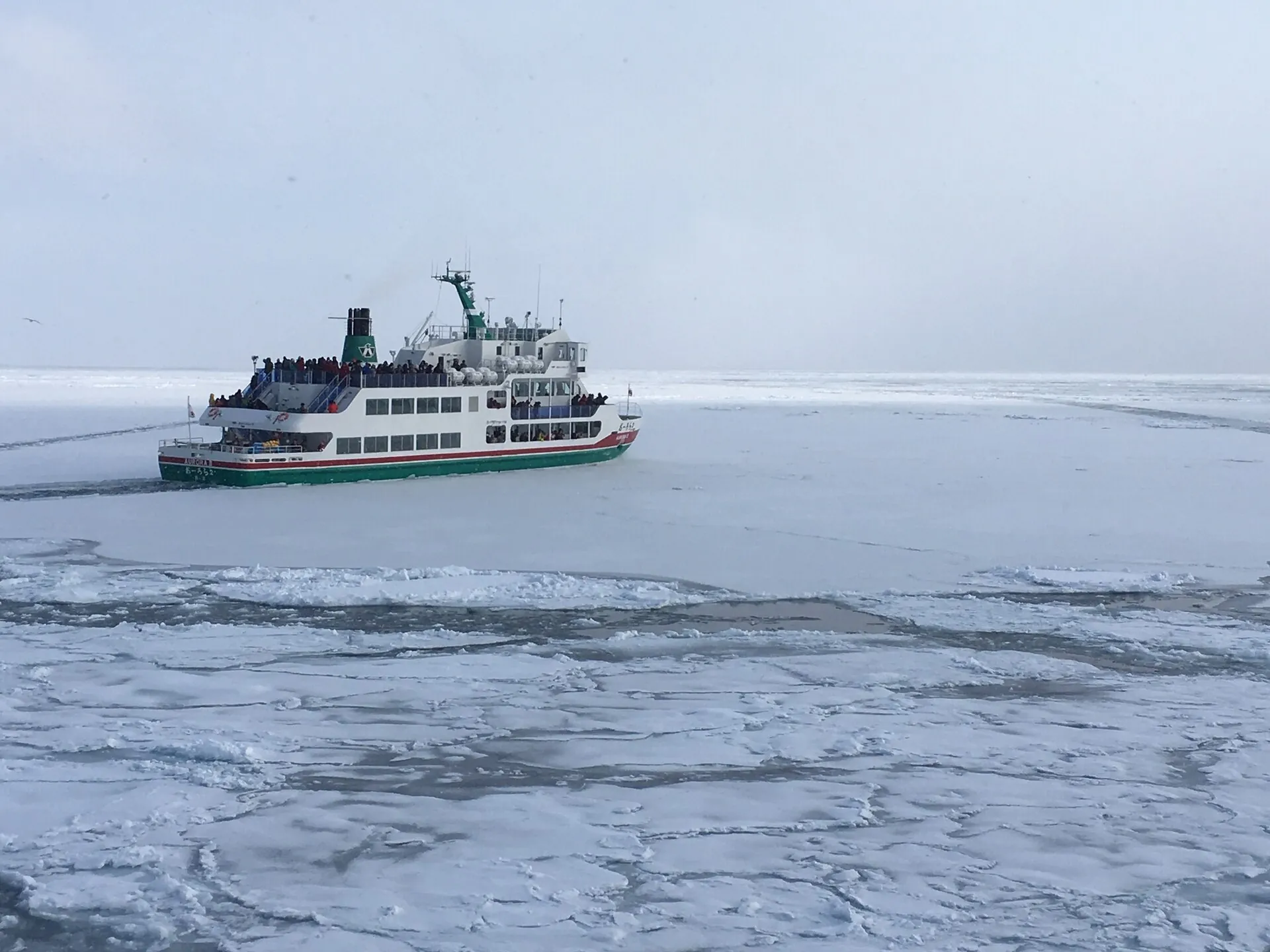
Taken in February 2019: a past season, not a promise for this winter.
Abashiri, Monbetsu or Utoro: which base?
Scroll sideways to see the full table.
| Base | Visit for | Getting there | Before booking |
|---|---|---|---|
| Abashiri (station and city) | The Aurora icebreaker and the city's museums | Abashiri Bus runs an airport bus from Memanbetsu Airport to Abashiri Station and the city | Times for your arrival and return flights in that season. The boat terminal is not at the station; check the transfer to the pier and hotel |
| Monbetsu | The Garinko-go III IMERU icebreaker | Airport bus or car from Okhotsk Monbetsu Airport. The airport estimates about 15 minutes by car to the city centre, not to the pier | The airport's published bus timetable runs to 30 November 2026. Check the updated winter timetable and the trip from the city to the boarding point |
| Utoro Onsen (Shari town) | Shiretoko sightseeing and a hot-spring stay | JR to Shiretoko-Shari Station, then a Shari Bus local bus. A seasonal Airport Liner (Memanbetsu → Abashiri → Shari → Utoro) is not year-round | Whether buses run on your date. Shiretoko-Shari Station is not Utoro Onsen; ask your hotel about a pickup from the stop |
Sources: Abashiri Bus; Monbetsu Airport access; Shari Bus Airport Liner; Shari Bus local buses (all Japanese). Past timetables are not a guide to the next season.
Abashiri · Monbetsu · Shari (Utoro)
Choose your boat before your hotel
For a winter boat trip, pick one departure base first: Abashiri for the Aurora or Monbetsu for Garinko-go. Check reservations, operating dates, the boarding deadline and the last leg to the pier, then book your hotel. Weather and ice affect departures and routes, and no period guarantees sea ice; without ice, the Aurora may switch to a sea-sightseeing cruise, and sailings can be cancelled. The Aurora's operator asks passengers to book only their first-choice departure and not to hold duplicates. For flexibility, keep spare days in the trip rather than reserving several sailings. Aurora (Japanese) · Aurora prices and timetable · Garinko-go (Monbetsu) official booking (Japanese)
Drift ice guide: compare the Aurora and Garinko-go
If there is no ice or the boat is cancelled
In Abashiri, the Okhotsk Ryuhyokan has drift-ice exhibits, and the Moyoro Shell Mound Museum displays Okhotsk-culture pottery and artifacts. The modern region and this archaeological culture share a name but are not the same thing. Moyoro's grounds also include an outdoor archaeological site, so choose what to visit for the weather. Check opening hours, closures and local transport before leaving. Okhotsk Ryuhyokan · Abashiri City — Moyoro (Japanese)
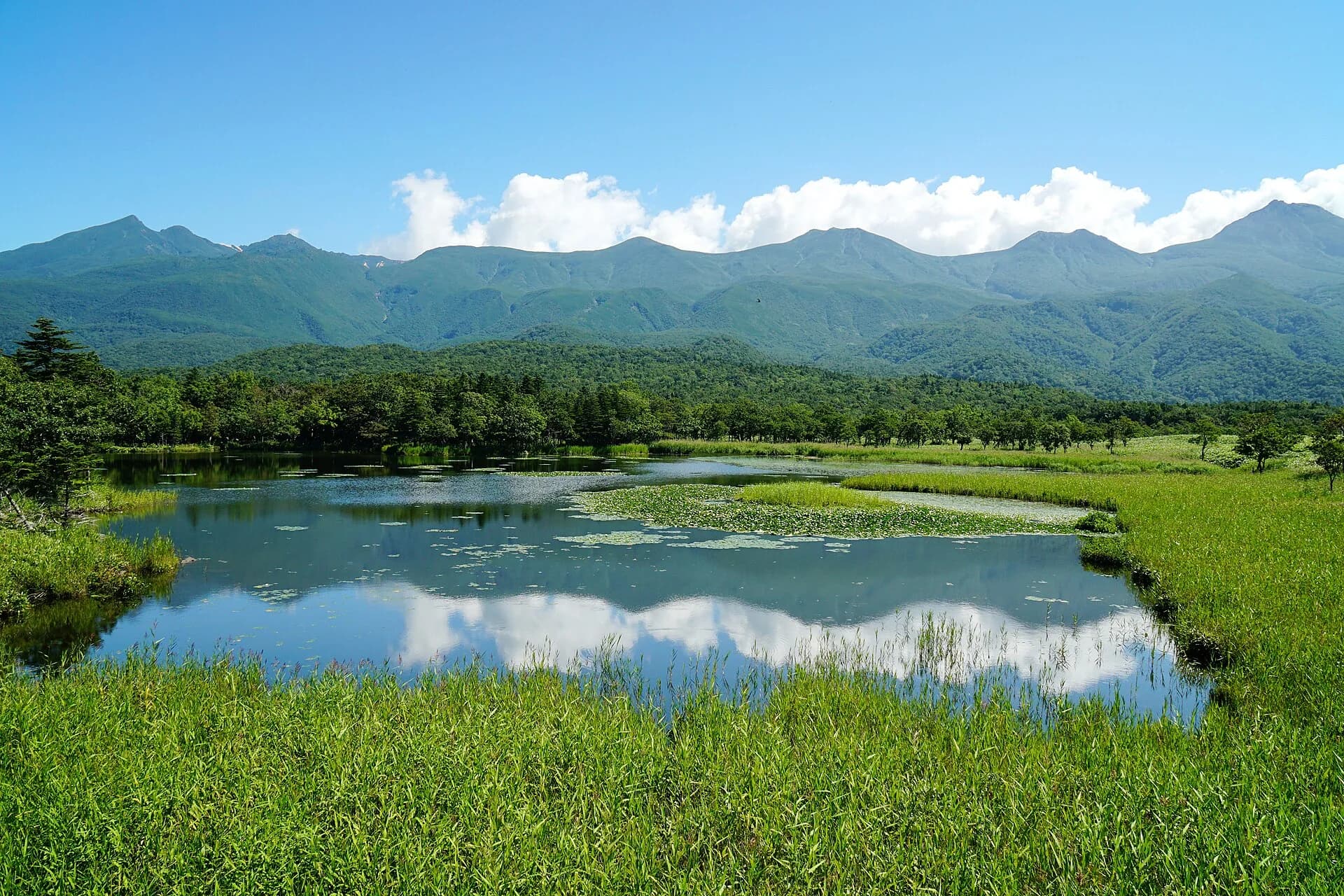
A green-season scene from August 2014, not winter conditions or a sign of unrestricted access.
Where to stay: match your hotel to the departure
Stay near Abashiri Station or in the city for trains, buses and the museums. Hotels by Lake Abashiri are not next to the station or the pier. For Garinko-go, plan a separate night in Monbetsu. For Shiretoko, base yourself at Utoro Onsen in Shari and check hotel pickups. Utoro and Rausu are on opposite sides of the Shiretoko Peninsula, and the Shiretoko Crossing Road between them closes in winter, so do not plan a winter crossing to a hotel on the other side after a boat trip. Shiretoko Crossing Road (Japanese)
Official information checked 15 October 2026. Base choices are NLH editorial suggestions; confirm dates, times and booking conditions with operators.
Okhotsk highlights
Drift ice cruises
Sightseeing boats sail from Abashiri and Monbetsu in winter. Ice is not guaranteed, and weather and sea conditions decide departures and routes.
Shiretoko gateway (Utoro)
The Shari-side base for World Heritage Shiretoko, with the Five Lakes and boat cruises. Access and tours vary by season, so check before you go.
Lake Saroma scallops
A large coastal lake behind a long sand spit, known for scallop farming.
Abashiri Prison Museum
Preserved prison buildings and exhibits on the prison's history and Hokkaido's development.
The 18 towns of Okhotsk
Click a town to jump to its entry
Kitami北見市
Kitami grows Japan's onions, once supplied most of the world's mint, and has the country's densest yakiniku-restaurant culture — plus curling champions.
Kitami town page →Abashiri網走市
Abashiri means two icons: the historic prison museum and winter's drift-ice cruises — with a lake that turns coral-red with glasswort each autumn.
Abashiri town page →Monbetsu紋別市
Monbetsu sends the Garinko icebreaker crunching through the pack ice all winter; a giant crab-claw sculpture guards the harbor.
Monbetsu town page →Bihoro美幌町
Bihoro's pass is one of Japan's great road-trip moments — the whole Kussharo caldera suddenly below your windshield.
Bihoro town page →Tsubetsu津別町
Tsubetsu's mountain pass terrace floats above a sea of clouds over Lake Kussharo on lucky mornings — a forestry town gone quietly cool.
Tsubetsu town page →Shari斜里町
Gateway to Shiretoko, the UNESCO World Heritage peninsula with one of Japan's densest brown bear populations. Drift ice walks in February, waterfall hikes in summer.
Shari town page →Kiyosato清里町
Kiyosato (Okhotsk) distills potato shochu and guards Kaminoko Pond — a hidden pool of impossible cobalt fed by Mt. Shari's springs.
Kiyosato town page →Koshimizu小清水町
Koshimizu's coastal flower garden blooms wild between the Okhotsk Sea and a swan-filled lagoon — best crossed by the little seasonal train stop.
Koshimizu town page →Kunneppu訓子府町
Kunneppu is onion-and-melon farm country with a local secret: soy-glazed katsudon that locals will argue is the region's best.
Kunneppu town page →Oketo置戸町
Oketo turns its forests into Oke-Craft — pale, feather-light woodenware beloved by Japanese design shops.
Oketo town page →Saroma佐呂間町
Saroma raises fat scallops and oysters in Lake Saroma, Japan's third-largest lake, and hosts the country's most storied 100km ultramarathon.
Saroma town page →Engaru遠軽町
Engaru plants ten million cosmos flowers on its Sun Hill each autumn, watched over by the great Ganbo Rock.
Engaru town page →Yubetsu湧別町
Yubetsu's tulip park erupts into 200 varieties every May — a Dutch postcard scene on the Okhotsk coast.
Yubetsu town page →Takinoue滝上町
Takinoue carpets a whole hillside in pink moss phlox each May and leads Japan in true Japanese mint — the town smells faintly of it.
Takinoue town page →Okoppe興部町
Okoppe is a dairy town whose butter and cheese have a cult following — and a rider-house in an old train car for touring cyclists.
Okoppe town page →Nishiokoppe西興部村
Nishiokoppe, a forest village of a thousand people with matching orange roofs, runs a wooden-toy wonderland museum deep in the woods.
Nishiokoppe town page →Omu雄武町
Omu lands hairy crab and autumn salmon on the northern Okhotsk, with a lighthouse cape famous for sunrise over the ice floes.
Omu town page →Ozora大空町
Ozora holds Memanbetsu Airport, sunflower fields and the Merhen Hill — seven larches on a ridge that every camera in eastern Hokkaido knows.
Ozora town page →
Guides that cover Okhotsk
Abashiri in Winter 2026–27: Drift Ice, the Aurora Cruise and the Cold
Abashiri in winter: the Aurora icebreaker runs January 20 – March 31, 2027, drift ice reaches the shore around February 4 on average, and January nights average -8.9°C. A two-night plan, where to stay and fares to check.
Read →
Hokkaido in March 2027: Weather, Snow, Spring Skiing and Last Drift Ice
Hokkaido in March: Sapporo averages a high of 4.5°C and a low of -2.4°C, with snow still on the ground. Niseko's spring lift-pass price starts March 23, night skiing ends March 22 and both drift ice cruises run to March 31, 2027.
Read →
Hokkaido in February 2027: Snow Festivals, Drift Ice and Weather
Hokkaido in February 2027: the Sapporo Snow Festival (Feb 4–11), Asahikawa Winter Festival (Feb 6–11) and Otaru Snow Light Path (Feb 6–13) overlap, drift ice cruises are running, and Sapporo averages 0.4°C by day and -6.2°C at night.
Read →
Hokkaido in January 2027: Weather, Powder Snow and Drift Ice
Hokkaido in January: Sapporo averages a high of -0.4°C and a low of -6.4°C, Kutchan near Niseko gets 253 cm of snowfall, and the Okhotsk drift ice cruises start on January 15 and 20, 2027. Official climate normals and dates, plus planning tips.
Read →
Hokkaido Winter Weather: Temperatures and Snow by Month, and What to Wear
How cold is Hokkaido in winter? Sapporo averages -0.4°C by day and -6.4°C at night in January, and Asahikawa's January low is -11.7°C. Month-by-month tables for five cities from December to March, with snow depth and what to wear.
Read →
Hokkaido Drift Ice 2027: Abashiri Aurora or Monbetsu Garinko Icebreaker
Drift ice cruises on Hokkaido's Okhotsk coast in 2027: the Garinko-go in Monbetsu runs daily from January 15 to March 31, 2027; the Aurora in Abashiri lists January 20 to March 31. Fares, what happens without ice, and how to get there.
Read →
More guides for this region (7)
- Hokkaido in Winter 2026–27: Snow Festivals, Drift Ice and Skiing, Month by Month
- Hokkaido Driving Times: How to Check Routes from Sapporo and New Chitose
- Best Places to Visit in Hokkaido: Cities, Nature and Onsen
- The Wild East: A Traveler's Case for Eastern Hokkaido
- 10-Day Hokkaido Itinerary: Sapporo, Furano and Shiretoko
- Hokkaido in Summer: The Season Japan Keeps to Itself
- Shiretoko Activities Guide: Five Lakes, Cruises and Where to Stay