One of Hokkaido's 14 regions
Tokachi十勝
Obihiro food, Tokachigawa Onsen and seasonal gardens on the Tokachi Plain.
Tokachi is an eastern Hokkaido region of 19 municipalities spread across the Tokachi Plain, a wide farming area that reaches far beyond Obihiro city. Obihiro is the usual base, with butadon pork rice bowls, sweets and banei racing, in which heavy draft horses pull sleds along a course.
Outside the city, Tokachigawa Onsen in Otofuke town is known for its moor hot springs, and gardens, farm cafes and cheese makers are spread across the plain. Some gardens are seasonal, and Manabe Garden closes in winter, so check opening periods and plan the last stretch from the airport or Obihiro Station.
🧭 Tokachi-Obihiro Airport and JR Obihiro Station are the main gateways. Plan the last stretch separately: the airport bus into the city, a local bus or taxi to the racecourse or onsen, and a car or taxi for gardens outside the centre.
Where is Tokachi? Obihiro, onsen and garden trips
Tokachi is an eastern Hokkaido region of 19 municipalities: 1 city, 16 towns and 2 villages, including Obihiro, Otofuke, Ikeda and Nakasatsunai. It spreads across the farmland of the Tokachi Plain and covers far more than Obihiro city. On a first trip, Obihiro works as the base for food and transport, while Tokachigawa Onsen lies outside the city in Otofuke town. Hokkaido Government municipality list (Japanese)
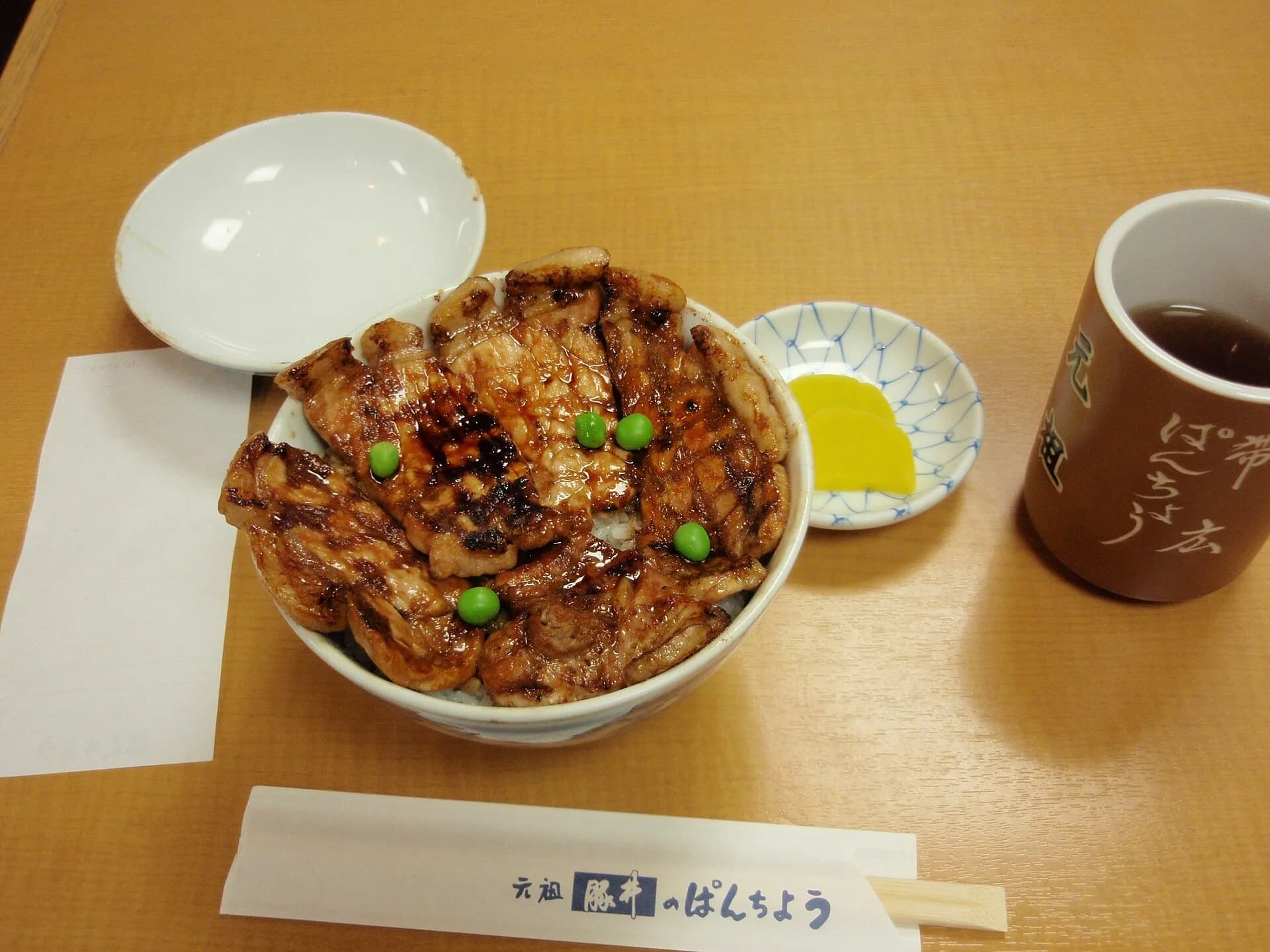
Butadon at Pancho, photographed in 2007: an example of Obihiro’s local dish.
Obihiro, Tokachigawa Onsen or Manabe Garden: how to get there
From Tokachi-Obihiro Airport, an airport bus runs to Obihiro city. Times change with the flights, so check the timetable for your travel date. Buses can fill up, so on the way home choose the bus that matches your flight. Tokachi Bus airport bus (Japanese)
Scroll sideways to see the full table.
| Area and purpose | How to get there | Before you go |
|---|---|---|
| Obihiro (butadon and banei racing) | Airport bus to the city. For Obihiro Racecourse, take a local bus from the Obihiro Station bus terminal to Obihiro Keibajo-mae, or a taxi from the station's south exit (about 7 minutes) | Races run only on scheduled days; check the official race calendar |
| Tokachigawa Onsen (Otofuke town) | Tokachi Bus route 45 from the Obihiro Station bus terminal to the onsen. By car, about 20 minutes from Otofuke-Obihiro IC to Tokachigawa Onsen | Route 45 was revised with fewer weekday trips from 13 October 2026; check whether your date has weekday or weekend/holiday service, and the last return. Some hotel stops need a reservation; confirm your hotel's stop or transfer |
| Manabe Garden (Obihiro) | By car, set the garden entrance as your destination. By public transport, check the way from the nearest stop to the entrance and the return service; if you use a taxi, book the pickup too | Open 25 April–23 November 2026 and closed in winter, with shorter hours in autumn |
Times are the operators' estimates; traffic, weather and winter roads can add time.
Sources: Banei Tokachi access, with the race calendar; Tokachi Bus local routes; Tokachigawa Onsen access; Manabe Garden (mostly Japanese).
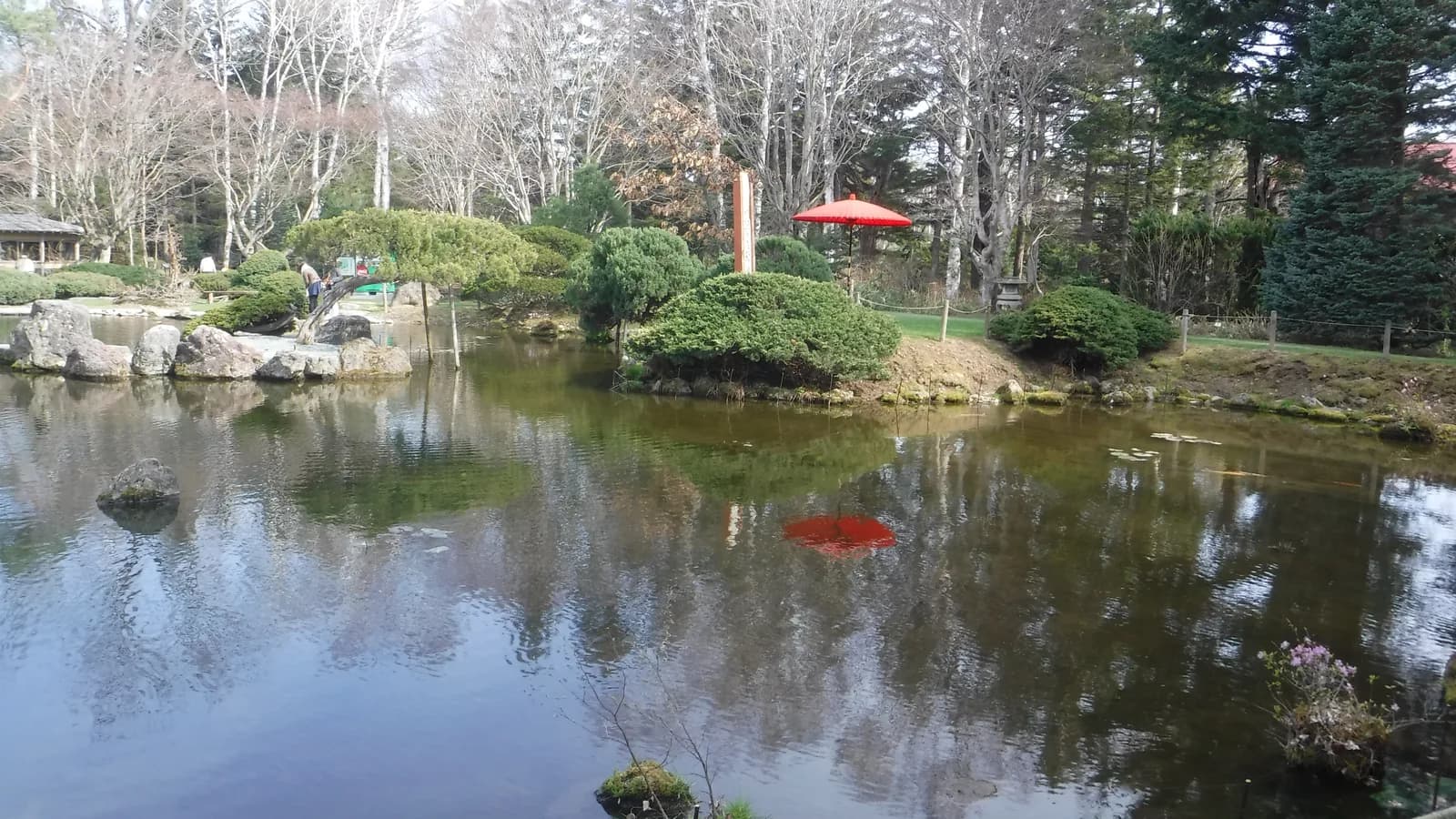
Manabe Garden: plan around the season
Manabe Garden in Obihiro is a conifer-centred tree garden where you can walk through Japanese, European-style and landscape gardens and enjoy the trees and ponds. It closes earlier in autumn, so check the season and hours against your arrival time. In winter, a plan built around food and the onsen is easier. Manabe Garden visitor guide
A suggested one-night, two-day plan
Day 1: eat in Obihiro, and visit the racecourse if a race day falls on your date. For the night, choose the city near Obihiro Station for restaurants and rail and bus links, or Tokachigawa Onsen for a quiet evening bath. Day 2: in the opening season, spend time at Manabe Garden; in winter, skip the garden and keep to food and the onsen. Allow time for the airport bus or train home; some legs may need a taxi. Obihiro food guide
Where to stay, and car or bus?
Stay near Obihiro Station if you rely on trains and buses, or at Tokachigawa Onsen in Otofuke if the bath is the point of the trip. Before booking an onsen hotel, check its actual stop, the last bus from Obihiro and whether a transfer is offered. A car makes it easier to link gardens spread across the plain, but allow time for winter roads, parking and refuelling before returning a rental car.
Obihiro · Otofuke · Hokkaido drive times
Official information checked 15 October 2026. The itinerary is an NLH editorial suggestion; recheck timetables, race days and opening conditions with each operator.
Tokachi highlights
Obihiro butadon
Obihiro's local dish of grilled pork with a sweet-savoury sauce over rice.
Banei horse racing
Heavy draft horses pull sleds at Obihiro Racecourse. Check the official race calendar before you go.
The Tokachi garden road
Gardens, farm cafes, sweets and cheese across the plain. Check each garden's season; some close in winter.
Tokachigawa moor onsen
Tokachigawa Onsen in Otofuke town is known for moor hot springs; pair a night there with Obihiro.
The 19 towns of Tokachi
Click a town to jump to its entry
Obihiro帯広市
The capital of Tokachi farm country. Butadon (pork rice bowl) was invented here, and the surrounding plains produce much of what Japan eats.
Obihiro town page →Otofuke音更町
Otofuke's Tokachigawa Onsen is farm country's answer to a spa town — rare moor hot springs the color of dark tea, minutes from Obihiro.
Otofuke town page →Shihoro士幌町
Shihoro turned its potatoes into an agricultural empire — the town co-op pioneered Japan's potato-chip industry.
Shihoro town page →Kamishihoro上士幌町
Ballooning over the Tokachi plain, the Naitai highland farm — Japan's largest public ranch — and bridge ruins emerging from Lake Nukabira.
Kamishihoro town page →Shikaoi鹿追町
Shikaoi opens onto Lake Shikaribetsu, Tokachi's 'lake in the sky' — home to a unique native trout and a village built of ice each winter.
Shikaoi town page →Shintoku新得町
Shintoku is Tokachi's soba town and home to award-winning alpine cheesemakers — with a resort ski hill above the buckwheat fields.
Shintoku town page →Shimizu清水町
Shimizu sits where the Tokachi plain meets the Hidaka wall — gateway to the Millennium Forest gardens and big-sky dairy country.
Shimizu town page →Memuro芽室町
Memuro leads Japan in sweet corn and invented gateball — grandma-approved sport of champions — amid perfectly gridded Tokachi fields.
Memuro town page →Nakasatsunai中札内村
Nakasatsunai is edamame country with an art twist — a confectioner's sculpture garden village blooms among the birch groves.
Nakasatsunai town page →Sarabetsu更別村
Sarabetsu farms potatoes and sugar beets on heroic scales, and grows a village orchard of northern plums.
Sarabetsu town page →Taiki大樹町
Taiki is Japan's 'space town' — a private rocket spaceport launches from its Pacific coast, cheese wheels age in its dairies.
Taiki town page →Hiroo広尾町
Hiroo is Santa's official Japanese hometown (licensed by Norway, no less) and a serious fishing port for shishamo and salmon.
Hiroo town page →Makubetsu幕別町
Makubetsu invented park golf — now played all over Japan — and its Churui district yielded a near-complete Naumann elephant skeleton.
Makubetsu town page →Ikeda池田町
Ikeda built a castle for wine — Japan's pioneering municipal winery has poured Tokachi reds since the 1960s.
Ikeda town page →Toyokoro豊頃町
Toyokoro's winter beach glitters with 'jewelry ice' — crystal-clear river ice polished by Pacific waves — and a lone elm tree poses in its pasture.
Toyokoro town page →Honbetsu本別町
Honbetsu is Tokachi's bean town — azuki and kidney beans by the silo-load, celebrated in everything from sweets to shochu.
Honbetsu town page →Ashoro足寄町
Ashoro grows fuki butterbur taller than people and guards Onneto, a five-color caldera lake at the foot of Mt. Meakan.
Ashoro town page →Rikubetsu陸別町
Rikubetsu is officially Japan's coldest town — it celebrates with a February endurance festival and stargazing through a giant public telescope.
Rikubetsu town page →Urahoro浦幌町
Urahoro rolls from Tokachi grain fields down to a wild Pacific shore — quiet farm country with clifftop ocean lookouts.
Urahoro town page →
Guides that cover Tokachi
Obihiro Food Guide: Butadon, Rokkatei & Ryugetsu
Pair Obihiro pork bowls with sweets: plan a central-city visit without a car, or add Ryugetsu Sweetpia Garden in Otofuke to a Tokachi drive.
Read →
Hokkaido in Autumn: Japan's Fall Colors Start Here
While the rest of Japan waits for November, Hokkaido's autumn begins in September — alpine foliage on Daisetsuzan, harvest-season food at its peak, changing weather and local travel conditions. Here's how to plan it, month by month.
Read →
Hokkaido Driving Times: How to Check Routes from Sapporo and New Chitose
Hokkaido driving times from Sapporo to Wakkanai, Nemuro and Hakodate, then how to check real road routes, check road closures before you set off and plan rental car pick-up and return.
Read →
Best Places to Visit in Hokkaido: Cities, Nature and Onsen
Compare Sapporo, Otaru, Hakodate, Furano, Biei, Niseko and eastern Hokkaido. Choose where to go by interests, transport and hotel base, with routes for a first visit.
Read →
10-Day Hokkaido Itinerary: Sapporo, Furano and Shiretoko
A nine-night road trip from New Chitose to Memambetsu via Sapporo, Furano, Tokachi, Akan–Mashu and Shiretoko. Overnight stops, booking order and weather alternatives.
Read →
Hokkaido Food Guide: Regional Dishes and Where to Try Them
Plan meals along your Hokkaido route: Sapporo ramen and soup curry, Obihiro pork bowls, Otaru sushi and coastal seafood, with practical ordering and booking tips.
Read →